
The soybean oil has unique composition and is very easily digested by the human body.
|
Food value
|
|
|---|---|
| Caloricity | 899 kcal |
| Fat | 99,9 g |
| Unsaturated fatty acids | 60 g |
| Saturated fatty acids | 16 g |
| Water | 0,1 g |
|
Mineral substances
|
|
|---|---|
| Zinc(Zn) | 0.01 mg |
| Ferrum (Fe) | 0.05 mg |
| Phosphor (P) | 2 mg |
|
Vitamins
|
|
| Vitamin E (ТЭ) (E (ТЭ)) | 17,1 mg |
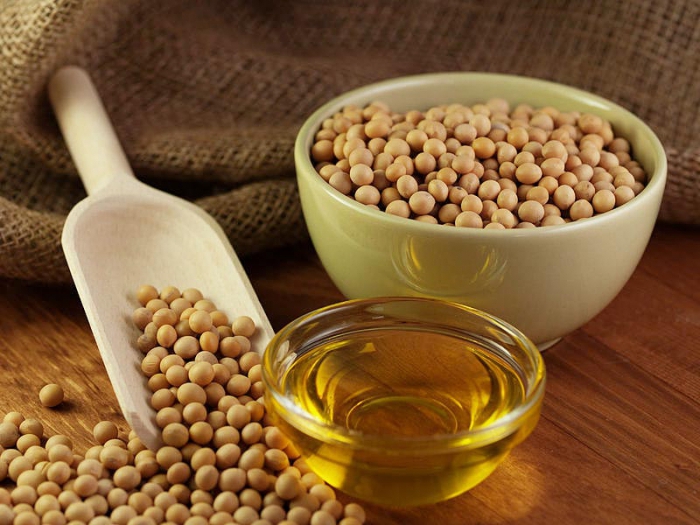 Soybean oil has the brightly yellow color and specific odor. That’s why refined soybean oil is usually used in for nutrition purpose – transparent oil with gentle pink tint manufactured by the methods of pressing and extraction.
The special value of soybean oil is determined by organic acids among which more of a half accounts for linoleic acid, the quarter – for oleic acid, stearic acid makes from 4.5 to 7%, linolenic acid – 3-5%, palmitic acid – 2,5-6% , arachic acid – 1-2.5% and some others. In addition, raw soya oil contains lecithin – important component widely used in confectionary and pharmaceutics.
Vitamin composition of soybean oil is diverse too. First of all, this product is rich in tocopherol (E1) which content reaches 114 mg per 100 grams (for comparison, olive oil contains just 13 mg). Soya oil contains choline (B4), vitamin E and K and minerals such as zinc and iron as well.
This vegetable product ecologically clean and rich in vitamins beneficially affects the activity of entire organism: strengthens immune system, decreases content of cholesterol in blood. Many domestic and foreign consumers note the prime quality and excellent flavor profile of soya oil.